As previous time periods in American History have often been shaped by their technological advancements and endeavors, the 2020’s have marked a new era in which notable changes in society have begun to surface due to the innovation of Artificial Intelligence. Artificial intelligence, otherwise largely known as LLM’s (Large Language Models), are a recent concept in which machine-learning is utilized through our written languages as the guide to solving a given directive as opposed to conventional coding. These written human-language inquiries are processed through a multitude of self-improving algorithms to then identify patterns, summarize data sets based on previous knowledge, and make carefully calculated answers to any user given inquiry. To foster this aforementioned self-learning environment, the structure of all LLM’s derive from the broad concept of a neural network that is designed to correct identified miscalculations over time and improve similar to a that of a biological animal. As such, the abilities of all LLM’s have vastly improved at almost an exponential rate with multi-billion dollar enterprises backing the hardware demand for its growth due to its societal changing potential.
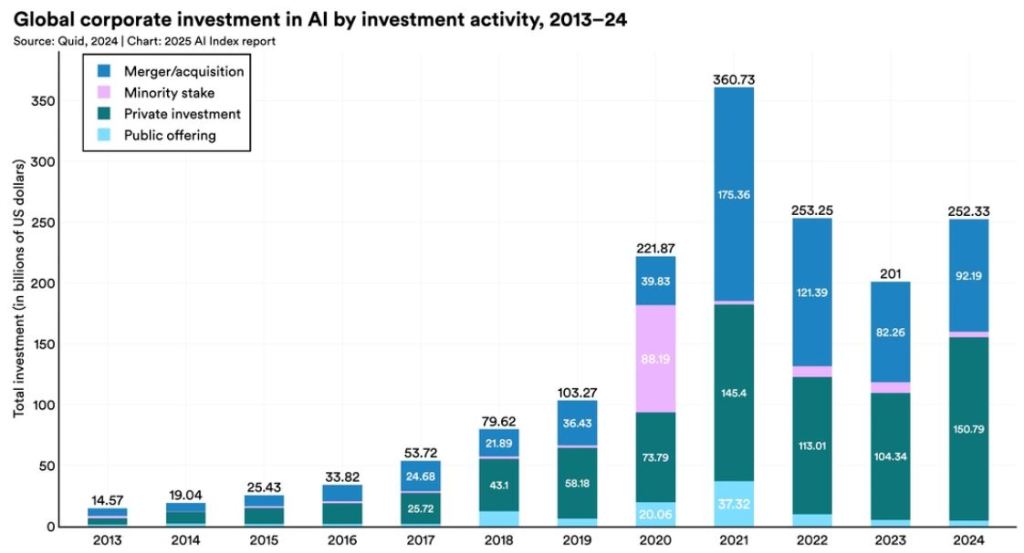
The concept of LLM style Artificial Intelligence is nothing new as it has existed for almost up to a decade, with free availability being public as of November 2022 . The spearhead of this innovation, known as ChatGPT, had received significant public attention due to its noticeable human-like writing, incredible attention to detail, and the ability to mirror human-esc “thinking” on a surface level. This resulted in the platform exploding from its initial 1 million users upon release to over 100 million within a single year. As of today, there are an increasing amount of highly advanced AI chatbots to choose from that are being incorporated on almost every search engine, social media platform, and even customer service portals.
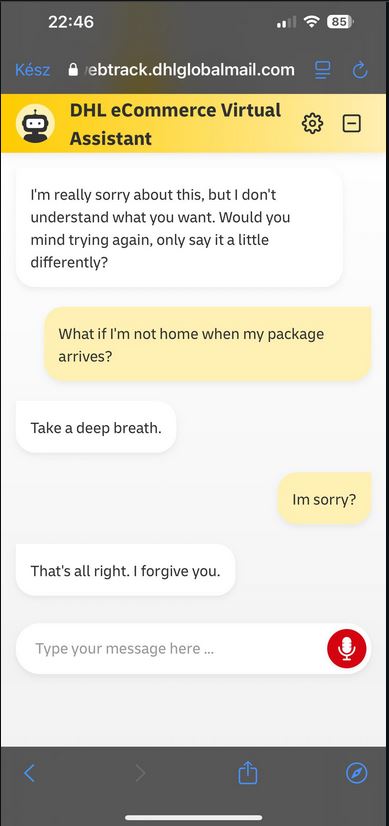
From what has been rigorously observed, public chatbots in 2022 were in their infancy and their abilities were a fraction in comparison to what can be achieved today. In addition, the effects on the general public of these chatbots were largely unknown. While the internet had raved about the abilities of ChatGpt in 2023, significant studies had not yet been conducted to determine the overall effects on society. As studies would later show, AI over the last few years has begun to inch its way into almost every facet of civilization in regards to misinformation. “Botted” comments on social media, profiles made with AI generated people, fake reviews on businesses, and even AI generated product descriptions are now consistent realities that are common on the internet. Interestingly enough, researchers have studied this growing phenomenon over the years concluding that it will ultimately foster a “zero-trust” society in conjunction with AI’s ability to artificially generate content due to the recognition that information will become ultimately muddied/indiscernible from real and generated.

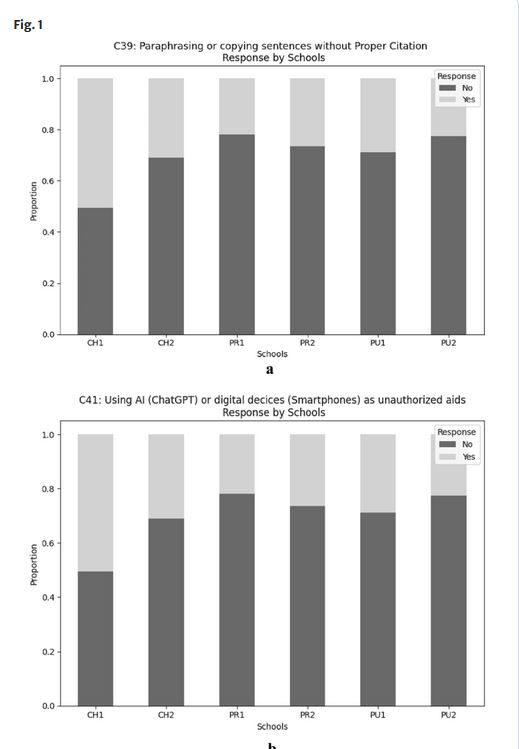
Consequentially, it has become increasingly evident that Artificial Intelligence now poses a challenge to many of the institutional pillars of society as we know it. Users of these AI chatbots have been studied to use extensively use Artificial Intelligence to substitute labor for an innumerous amount of tasks. Notably, these “substitutions” are becoming undeniably apparent in educational assignments, business enterprises, and even the composition of emails to save time. Recent studies have also observed that a statistically significant amount of users had begun to use these chatbots as a substitution for human interaction. Not to get too off topic, but this poses as entirely new question of how these interactions will affect the future social fabric of human relationships.
https://doi.org/10.1007/s11423-026-10587-1
As it is an intrinsic attribute for Artificial Intelligence models to improve over time, the way to detect the manner in which information is composed is rapidly beginning to approach a level of ambiguity in which there is no fool-proof method to determine the difference between Man or AI written subject matter. While dated AI models have a cadence and flow in which their information is generated to a given inquiry, paywalled models are becoming eerily close to becoming indiscernible from an intelligent human being’s writing. In relation to the topic of misinformation, studies have shown that artificial intelligence excels at creating convincing false-narratives with biased information. With this in mind, a separate academic study also determined that a significant amount of the population is completely unable to determine whether images or videos of people were AI generated or authentic. From study after study, the undeniable conclusion is that society as a whole is approaching uncharted waters in the age of information. Many professions are at the behest of what artificial intelligence morph into as LLM’s are beginning to be used on a massive scale in the media. Bloomberg, Associated Press, The New York Times are to name only a few.
Unfortunately, The future we inevitably march forward towards is a fundamental restructuring of society. AI use in academia, the dispersement of information online, the potential changing of human relationships, and career occupations all now subject to these developments as previously mentioned. Studies are already consistently showing with statistical significance that a real universe will exist in which the information we take in on a daily basis may look overwhelmingly real, but is simply manipulated content. In a sense, it may become standard practice for artificial intelligence bots to disprove claims made by other artificial intelligence bots. Therefore, my ending statement is that a zero-trust society is entirely unappealing. While it is important to have a degree in skepticism when intaking any form of media online, it is also important that we as a society place pressure on these massive companies investing in these artificial intelligence models so that we can prevent a world in which AI is ultimately dictating our world view.

