Apollo and the Rise of Conspiracy Hoaxes

“That’s one small step for man, one giant leap for mankind”. – Neil Armstrong
In 1969 a monumental achievement and insurmountable milestone was reached, landing a man on the moon. What originally started off as a show of force after the events of World War 2, became a race between the U.S.S.R and the United States to mark superiority in ideology and scientific achievement. Broadcasted to millions across the world, landing a man on the moon symbolized a massive victory for the United States in the Cold War. Yet even while it was happening, bad actors came out of the shadows and began to question its validity. Some of the first theories that arose questioning the moon landing revolved around alleged inconsistencies within photographic and video footage evidence NASA provided. The first rumors surrounding the moon questioned the lack of stars in the background of lunar pictures and the movement of the American flag in the vacuum of space. Another theory that is still pushed to this day is the idea that the lunar landings were even recorded in a Hollywood film studio.
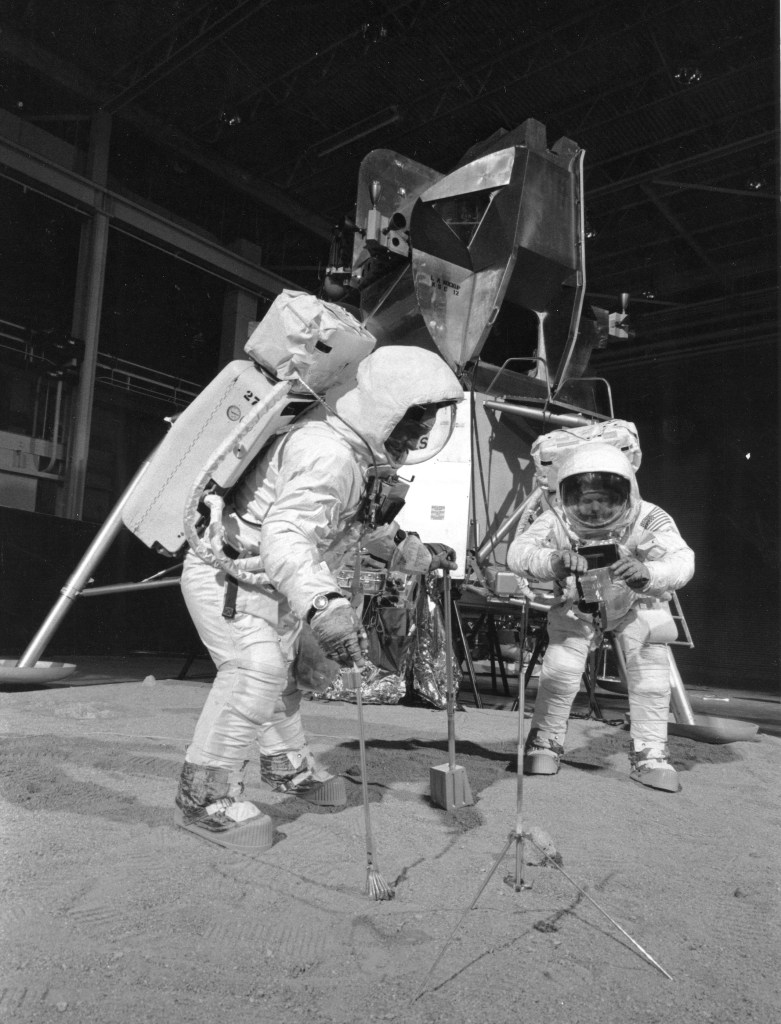
In the aftermath of the Watergate scandal amidst the Vietnam war, growing distrust of the federal government contributed to an increasingly negative public opinion of the United States. Movements questioning governmental authority emerged and established accomplishments of the country faced increased scrutiny. During the 1970’s, public distrust began to reach unprecedented levels during which an author, Bill Kaysing, openly challenged NASA’s scientific capabilities. In 1976, Kaysing published We Never Went to the Moon: America’s Thirty Billion Dollar Swindle functioning as a hit piece against NASA and asserted that the moon landings were nothing more than a Hollywood fabrication. Upon evaluation, his book is filled with nothing more than low-information accusations that utilize surface level knowledge to make broad and unverifiable claims. Moreover, Kaysing’s hypothesis lacked any real level of substantive expertise or scientific grounding in rocketry. The Soviet Union accepted the results of the Lunar landing, thus making Kaysing’s main theory fall apart. It is also important to note that the U.S.S.R’s advanced surveillance also verified the legitimacy of the Apollo missions.
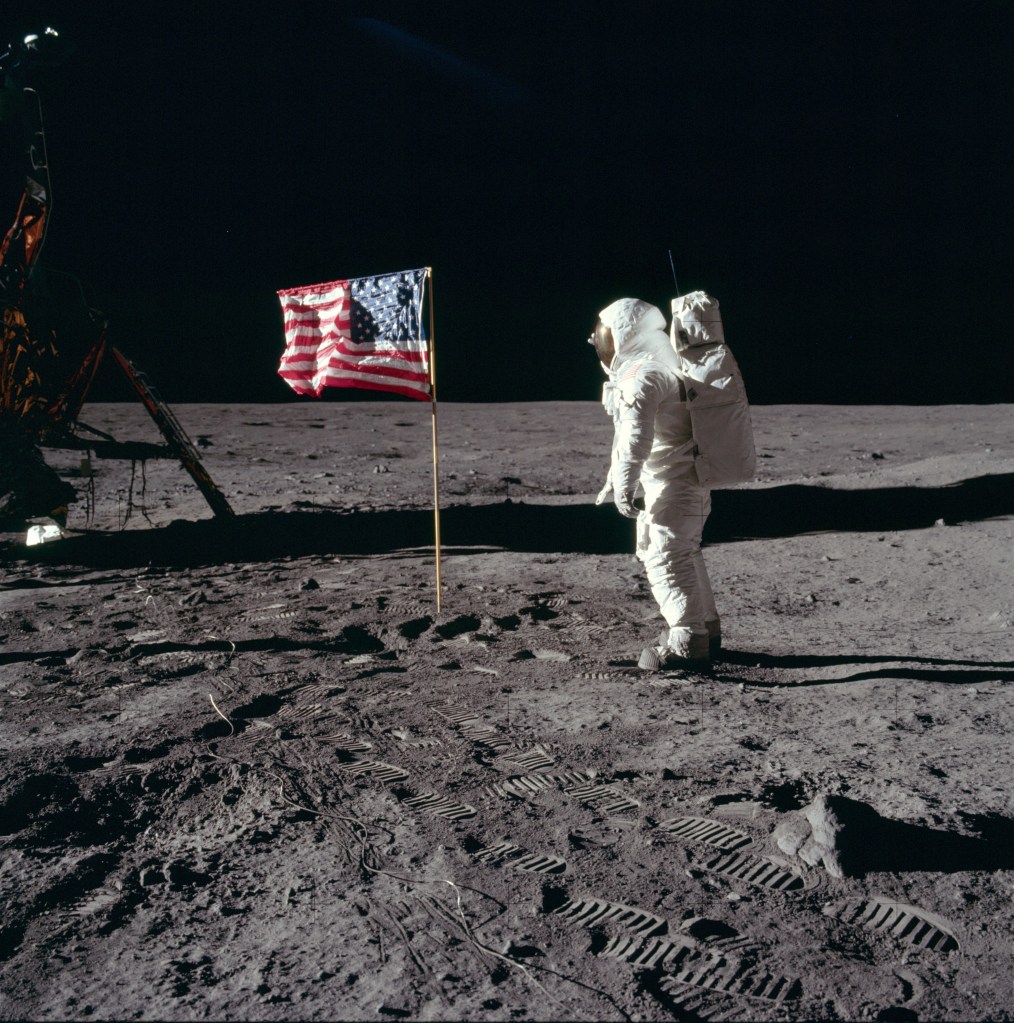
Kaysing’s publication is important to note due to its domino effect in the Moon landing conspiracy community. His methods were often applied to other controversial events, sparking a chain of conspiracy communities revolving around the Apollo missions. One tactic employed in many of his theories concerning the lunar landing is “cherry picking”. In this case, cherry picking was used to break down images and videos by questioning the physics of the Moon’s environment. As seen in the Apollo 11 image above, the flag appears to be waving in the vacuum of space. However, the vibrations and movement from planting the flag into the ground created a ripple effect, completely invalidating the claim that an atmosphere was moving the flag. Another method seen today among those who question the legitimacy of the Apollo missions is false association. Many in the community have argued that due to the high quality of the movie 2001: A Space Odyssey (1968), NASA’s evidence could have been possibly fabricated by film studios in Hollywood. This method and theory holds up to zero scrutiny and appeals purely to emotional distrust. Moreover, additional theories circulating in various online communities using the same methods are often fabricated in a way to appeal to those with strong anti-government sentiments. Thus, these theories draw on other events with conspiratorial narratives such as the Assasination of John F. Kennedy as an emotional foundation for rejecting any information released by the U.S government.
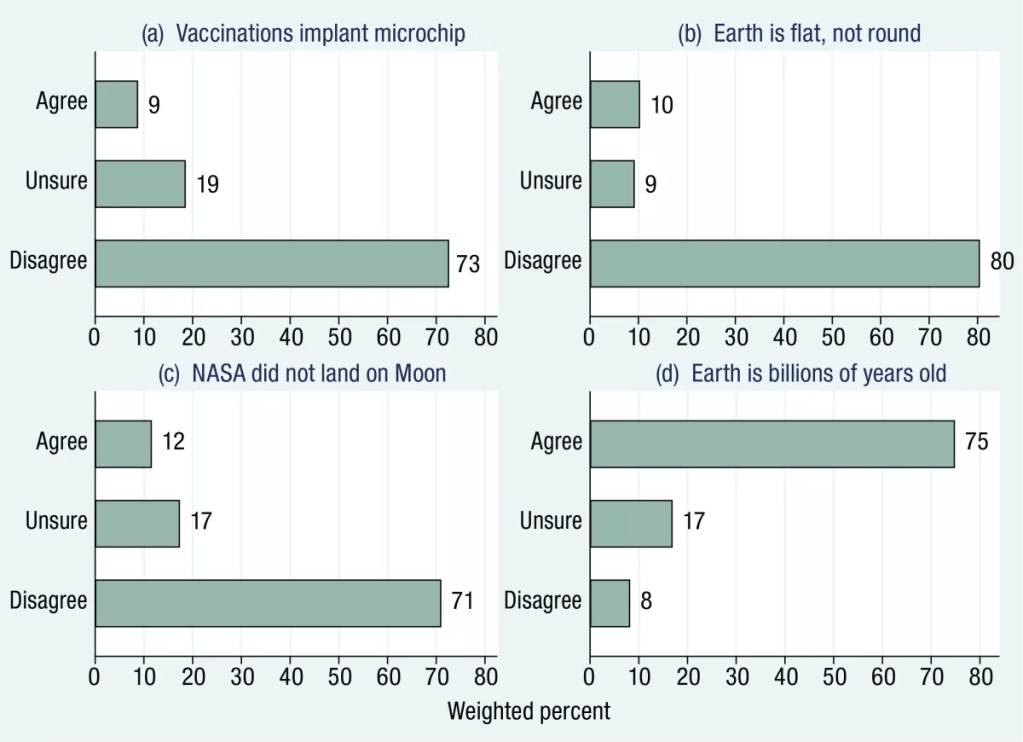
Various institutions have surveyed the public about the validity of these claims and the belief of the “Moon Hoax” among the general public. As seen in the image above, a POLES survey evaluated by the University of New Hampshire states that approximately 71% of adults disagree that the moon landing was faked. Therefore, it is reasonable to believe that as a whole this theory is predominately resolved among the general public. Additionally, there is an insurmountable amount of evidence verifying the legitimacy of the moon landing and even an extensive exhibit of over 400 artifacts used by the Apollo missions in the Smithsonian.
 Nathan's Blog