
As a result of the innovation known as internet, information moves quicker than ever before. While the internet has become one of the most useful tools in modernizing communication, there is the desire from bad actors to manipulate the minds of others for a variety of different unspecified agendas. As generated content is consistently more prevalent and accurate, it’s important to always stay informed and question the information that you take in on a daily basis. Thankfully, a useful internet tool and user friendly website to keep up to date on current rumors and potential misinformation is Rumor Guard. Rumor Guard is an up to date curation of the most popular viral sources of misinformation. By visiting the front page you can see links and pictures to the most viral pieces of misinformation alongside a solid explanation of why it is nonfactual. In particular, RumorGuard focuses on the most popular questionable claims that cycle on platforms such as X, Facebook, and other popular social media platforms.
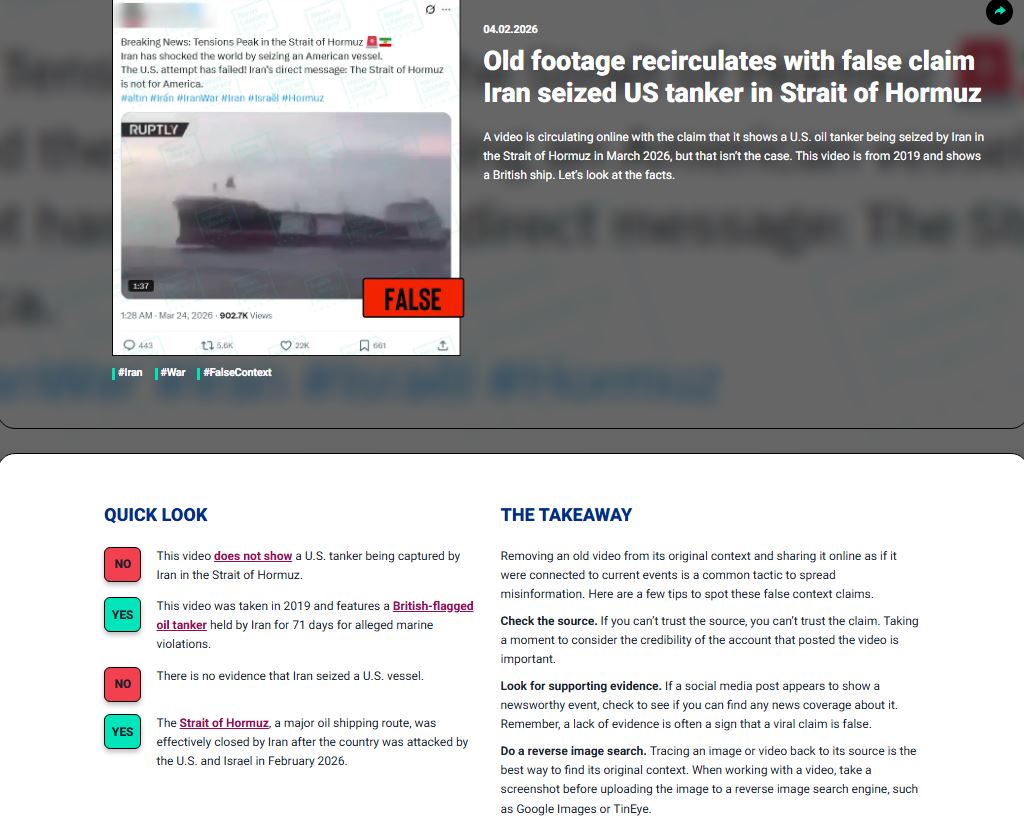
From my personal experience, Rumor Guard has been quite credible and gives a quick look at the most viral pieces of misinformation and how it is being framed. From just 2 days ago, Rumor Guard corrected popular misinformation about the sinking of a oil US tanker. They had properly identified that the video and context was actually stolen from a previous incident in 2019 and had no relation to the current state of political affairs in Iran!
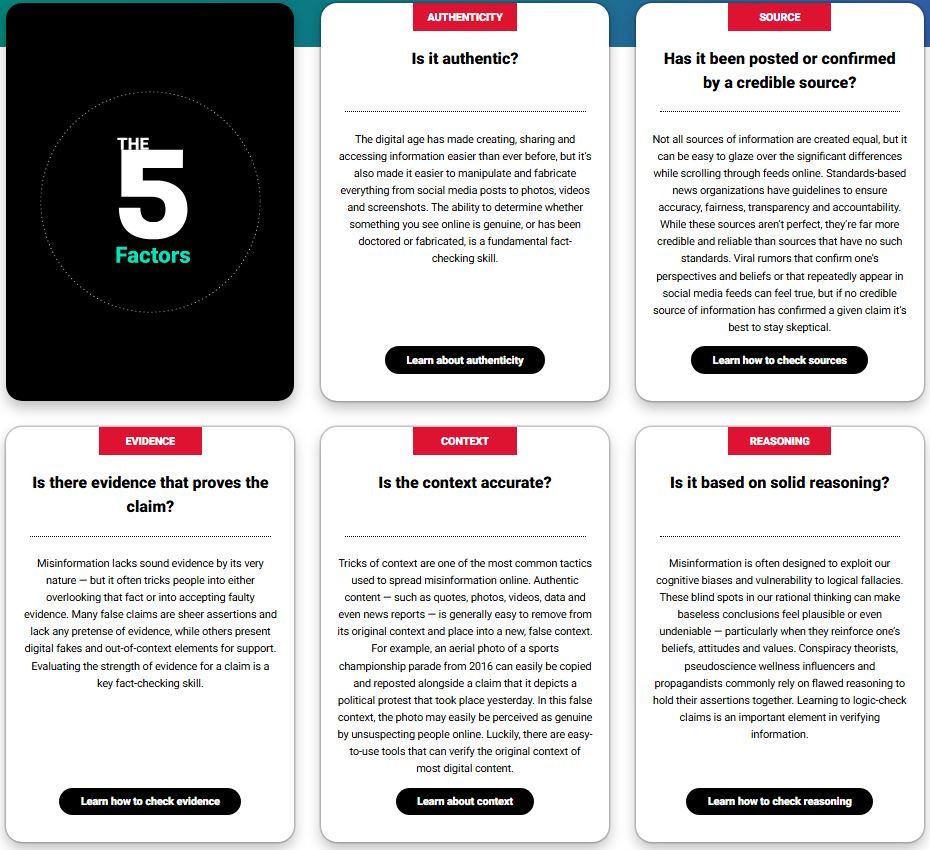
Lastly, another great function of RumorGuard is that it also hosts a breakdown of how to spot and identify misinformation. By clicking on the Factors tab at the top of the page, a 5 Factor breakdown explains what a user needs to answer before confirming whether new information is legitimate. These five factors are as follows: Authenticity, Source, Evidence and Reasoning. According to RumorGuard, to first identify a piece of potential misinformation a user should always confirm the media’s of authenticity (especially in the age of artificial intelligence), confirm that the original source of the media is credible, further fact check online to see if there is official sources with evidence backing the claim, evaluate the overall context and lastly determine if the claim made is based on solid reasoning. Because of this great breakdown on spotting misinformation, I give RumorGuard a 10 out of 10 in teaching the general public about verifying and fact checking the media they consume. It’s great way to minimize misinformation.
Learning about Bad News with BAD NEWS
Sometimes reading articles can be quite boring . So another great way to learn about the potential effects of misinformation is through educational games. After playing a variety of educational games about misinformation, my favorite is by far, Bad News. Bad News puts the player in the shoes of someone who wants to use social media to pursue the spread of disinformation and Fake News. The goal is to not only learn about how misinformation is spread, but to also see the methods in which it is employed.

What makes the game Bad News my favorite is that it highlights how platforms such as X can be used to plant and spread disinformation with a variety of different methods. In the game this ranges from sowing doubt in real events to using bots to boost misinformation, and even playing on the emotions of people to push a narrative. . It really puts into perspective the methods that are employed today by bad actors to push a narrative on the general populace. For those reasons alone I find this game to be quite an effective learning material for minimizing disinformation. Anyways, don’t just take my word for it try it out here!
To summarize, tools such as RumorGuard and Bad News are great for educating the general public on how to question the everyday information they intake. Due to the variation of methods used to control information, both of these tools teach that every piece of information consumed should be taken with a grain of salt. Always be sure to evaluate your sources and claims because others may want to control the way you think.

 Nathan's Blog