
Ever since the development of social media, researchers have observed that a growing proportion of the general population obtains their information via social media. As most of us already understand, information travels at a much quicker rate through these platforms and unverified news can propagate quickly in these environments. Videos, recordings, and textual information can all be posted without any form of verification while also allowing individuals to see first hand evidence of anything occurring before the legacy media makes a statement. As such, a development on these platforms such as X and Instagram is for legitimate sources to have verified accounts on these platforms alongside “community notes” to call out factually incorrect information. While these efforts definitely help to curb the rate that misinformation is spread online, it is ultimately up to the reader/user to determine whether information is genuine.

Parody, satire, and legitimately bad actors can all muddy the waters on social media. When an event or large claim is made on the internet, it can be legitimately difficult to always determine whether what a user is posting is tried and true. Therefore, I have made a tutorial on how to evaluate these claims using a variety of different methods. The first is the SIFT approach and the second is additional “Lateral Reading” to verify information.
An interesting claim that I ‘ve heard about since I was young, was the statement that WI-FI, cell signals, and EMF’s (electromagnetic fields) are effectively poisonous and can cause cancer. It has spurred all sort of rumors throughout the years such as not sleeping next to your phone at night or even avoiding the extensive use of products such as AirPods. I’ve always had a personal doubt to the claim due to the fundamental differences of understanding non-ionizing and ionizing radiation, but in this case I wanted to verify the claim due to the amount of red flags that are clearly visible. Not to mention, the plethora of fear driven products advertised online such as EMF “shields”, faraday cages, and harmonizers designed for human use.
To first evaluate this claim we need to understand the S.I.F.T approach. S.I.F.T is specifically a four step strategy to evaluate information in an unbiased way. It stands for STOP, Investigate the Source, Find Better Coverage, and Trace the claims to the source of origin.

To evaluate this claim, we must begin by acting upon the first letter of SIFT and “Stop” to think about what we understand about Physics and signals. Both are quite complex topics that require a level of critical research and it’s more than likely the average man has little to no knowledge of their proper function. In this step, is important to look for potential emotional pressures in the claim such as fear or if a product is being sold as a result of it. Understanding WIFI, Cell signals and Electromagnetic fields is quite a complex topic that has dedicated fields to function that certainly has individuals that understand more than some random on the internet making a claim.
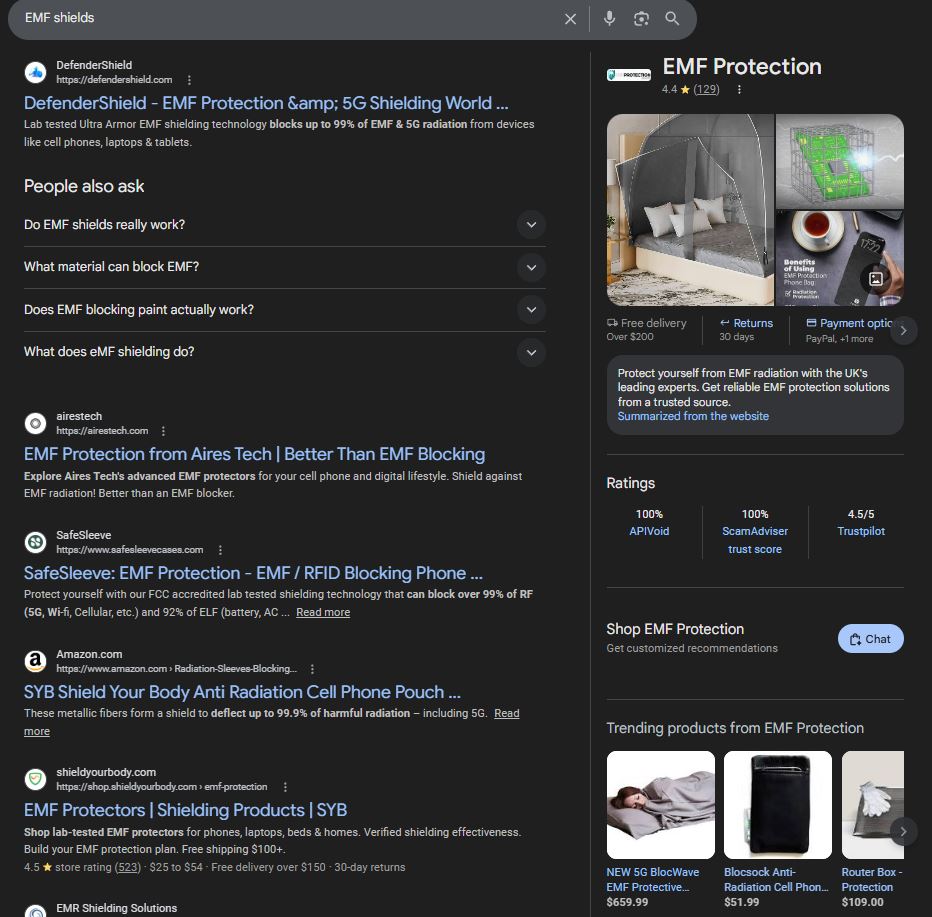
*To look at the financial incentives of this claim being pushed, simply search “EMF Blocking Shields” online and look at the plethora of different expensive products.

Seems quite like some quite profitable products at those prices….
Next, to evaluate this claim we have to “Investigate” and ask ourselves “What is the expertise of the individual making this claim?”. Throughout my life, the individuals making these sort of claims often knew little to nothing about cell signals or were never involved in physics. It seems that these claims today are often made by “alternative” lifestyle individuals online that push these sort of narratives which frequently fall into the greater category of off-grid living/being disconnected (which is sort of ironic in my opinion). To further investigate, these individuals often lack the expertise on how signals function or any type of institutional credibility on their understanding whether from a University or respective occupation. To look more into these individuals making these claims, simply look up “EMF’s”, “EMF’s causing Cancer”, or “Wi-Fi causing cancer” on Tiktok to see almost limitless misinformation.
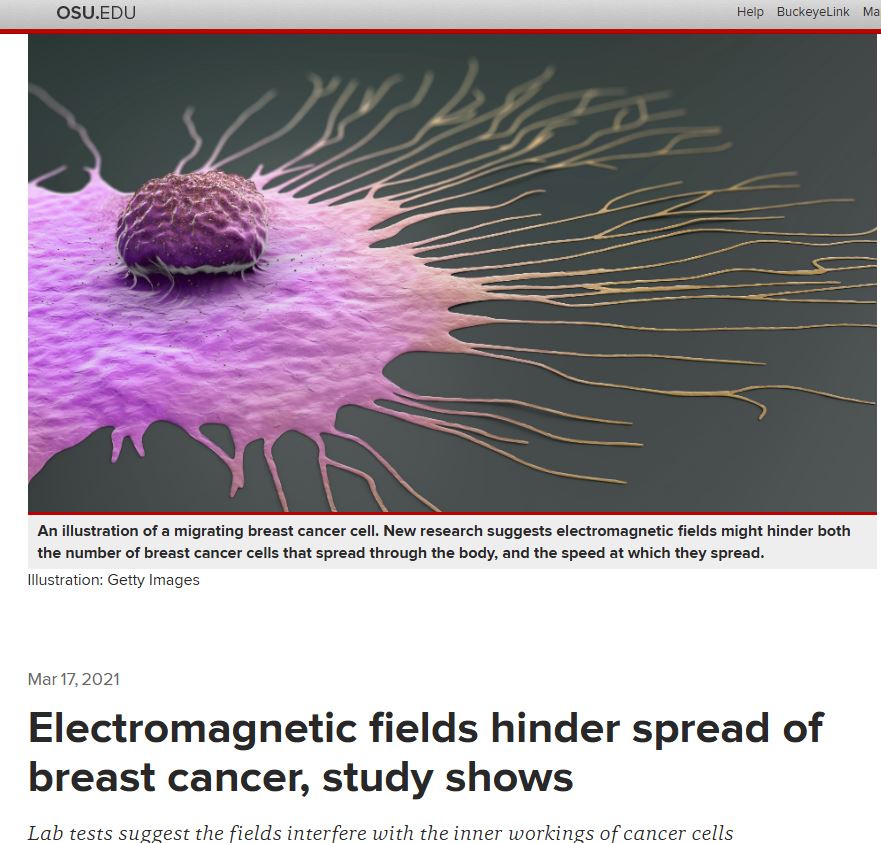
The next step in the process is “Find” better coverage. In a way, this is slightly similar to “lateral reading” as it requires looking into credible institutional sources not affiliated with the author of the initial claim. In particular, this means looking at sources associated with a renown organization such as the National Institute of Health, World Health Organization or research from an accredited University to learn more about EMF’s and their effects on the human body. From my research, I found that there is even a recent study from Ohio State University proving Electromagnetic fields can actually be used to hinder the spread of Cancer.
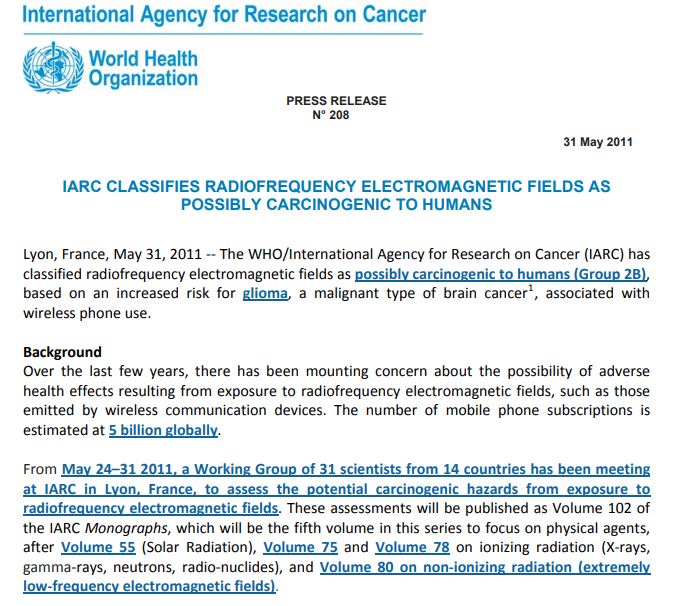
Lastly, to finish the SIFT process we need to “Trace” where these claims emerged from. After some investigation, I had found that one of the original sources of these claims originated from a classification by the World Health Organization. In 2011, the W.H.O division known as the International Agency for Research on Cancer officially classified radiofrequency as being possibly carcinogenic to humans due to inconclusive results. To further elaborate, this classification of being “possibly carcinogenic” is within the same category as coffee, vegetables and even Aloe Vera. Unfortunately, when this classification released the narrative spread far and wide. People refused to look further into what the study entailed and some ultimately came to the conclusion that ALL wireless signals cause cancer. This understanding spread like wildfire leading to the current status of the claim.
Lastly, after recognizing these steps from SIFT we can also evaluate further questionable claims by employing the “Lateral Reading” method. Lateral Reading involves looking into the credibility of a claim by leaving the site and immediately researching the publisher, author and its reputation. This method is great for quickly learning more about any potential bias or motives from the given author.

